
Family Trusts: What to Know Before Setting One Up
As families think more seriously about the long-term future — whether it’s helping adult children, supporting grandchildren, or planning for retirement — the idea of setting up a family trust often comes up.
Family trusts can be a useful structure in the right circumstances, but they’re not a one-size-fits-all solution. In this article, we’ll explore what a family trust is, why some people choose to use one, and what to consider before taking the next step.

What is a family trust?
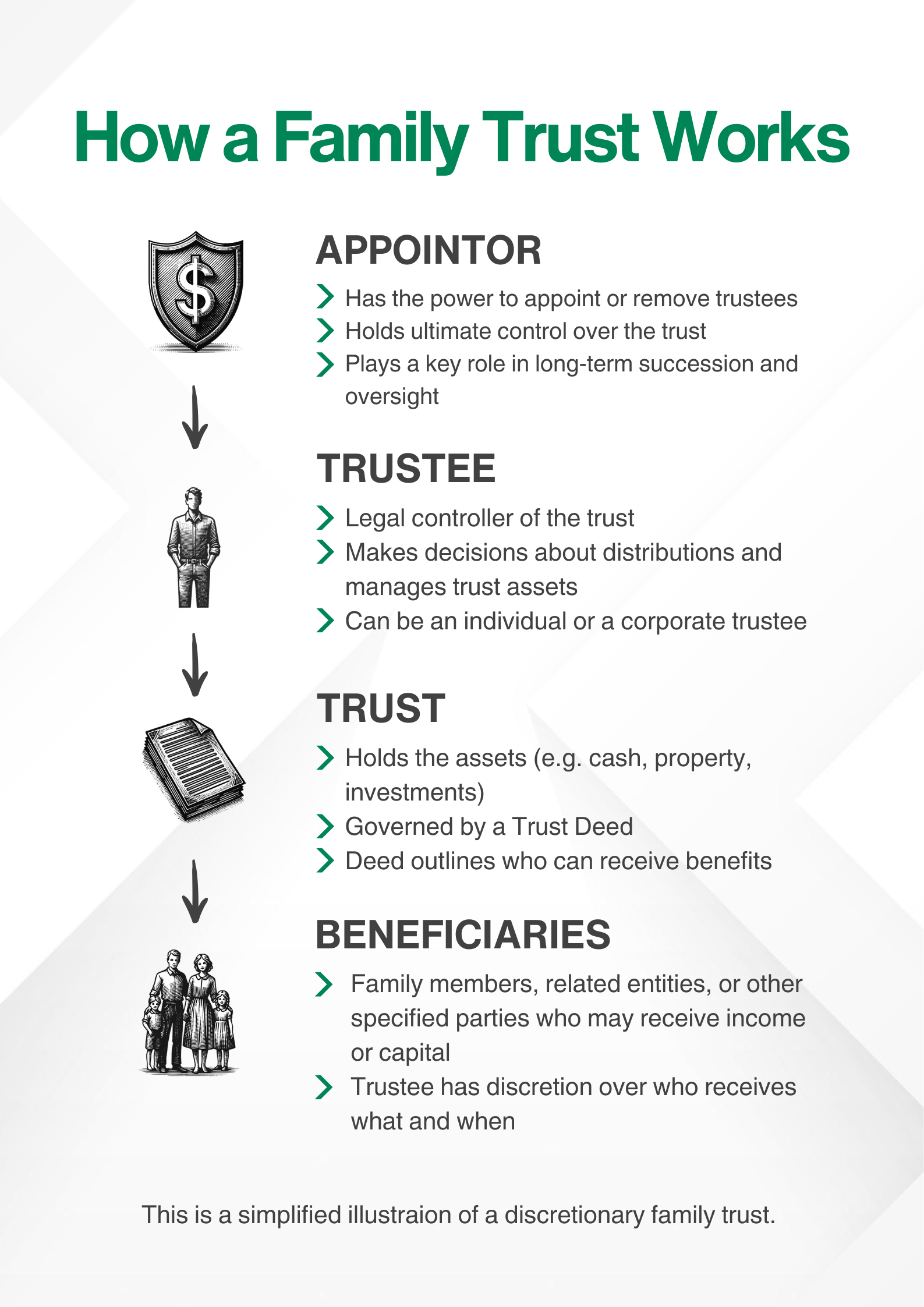
A family trust is a legal structure that holds assets for the benefit of family members (the “beneficiaries”). These assets might include cash, shares, property, or business interests.
A trustee — either a person or a company — controls the trust, making decisions about how income and capital are distributed to beneficiaries. The trust is governed by a trust deed, which sets out the rules.
Family trusts are typically discretionary trusts, meaning the trustee has the flexibility to decide how income is distributed each year.
Why do families set up trusts?
There are several reasons people consider family trusts as part of their broader financial planning:
Asset Protection
Assets held in a trust are generally protected from personal liability, which may be relevant in cases of business risk, litigation, or family breakdown. This can be particularly important for professionals, business owners, or families seeking to safeguard wealth for future generations.Tax Planning Flexibility
Family trusts allow income to be distributed to beneficiaries in a way that can make use of lower marginal tax rates (e.g. adult children or retirees with low taxable income). This may reduce the overall tax paid by the family group — but strict rules apply.Supporting Children or Grandchildren
Some families use trusts to help fund education, property deposits, or other support for children and grandchildren. Because the trustee controls distributions, the funds can be released gradually or in line with agreed intentions.Continuity and Legacy Planning
A family trust can help hold family wealth in one place over time, enabling smoother succession planning. This can be valuable when managing intergenerational assets like property or investments.
What are the considerations and downsides?
While trusts can offer advantages, they’re not always the right fit. It’s important to weigh up the responsibilities and limitations:
Set-Up and Ongoing Costs
Establishing a family trust involves legal documentation and professional fees. There are also ongoing costs — including annual tax returns and compliance requirements — that need to be factored in.Complexity
Trusts are not simple bank accounts. They come with legal obligations, record-keeping duties, and decisions that must be made in line with the trust deed. The trustee has significant responsibility and potential liability if things are done incorrectly.Limited Tax Benefits for Children Under 18
Income distributed to minor children is taxed at penalty rates, meaning the trust may not provide much benefit for young children — unlike education bonds or other structures which may be more tax-effective in those cases.Loss of Personal Ownership
Assets transferred into a trust no longer belong to you personally. This can be a benefit in some cases (asset protection), but it also means you give up direct control and flexibility. This can become an issue in the event of divorce, death, or disagreements among family members.Limited Life Span of Trusts
Most family trusts in Australia have a maximum life span of 80 years (unless established in South Australia, which allows perpetual trusts). This means the trust will eventually need to be wound up or have assets transferred — which could trigger tax and legal implications. It’s important to plan for this and understand how the trust’s eventual end may impact long-term family goals.
When might a trust be worth exploring?
Every family is different, but a trust may be worth discussing with your financial and legal advisers if:
You have growing investments or business assets and want to manage future tax and succession.
You’re thinking about supporting adult children or grandchildren and want to retain control over how funds are used.
You’re concerned about asset protection due to your work, business, or family circumstances.
You want to create a structure that outlives you, with a clear plan for continuity.
Final thoughts
Family trusts are a powerful tool, but they’re not a silver bullet. They can offer tax flexibility, control, and asset protection — but come with responsibilities and ongoing obligations.
The key is to ensure the trust aligns with your family’s goals, values, and long-term intentions.
Tip: A well-structured trust often works best when used alongside a broader financial plan — including wills, powers of attorney, superannuation, and insurance.
If you’re wondering whether a family trust could suit your situation, it may be helpful to speak with a financial adviser who understands your full financial picture, in coordination with your accountant and lawyer.
General Advice Warning:
Any general advice on this page does not take account of your personal objectives, financial situation and needs, and because of that, you should, before acting on the advice, consider the appropriateness of the advice, having regard to your objectives, financial situation and needs. Information contained on this page was correct at the time of posting.