
Common Investment Mistakes (and How to Avoid Them)
Investing can be one of the most powerful ways to grow wealth over time. But despite the long history of investment markets and the wealth of information available today, many investors still make common mistakes that can reduce returns, increase risk and lead to unnecessary stress.
At Arrow Private Wealth we regularly speak with clients about the behavioural traps and strategic errors that trip up even well informed investors. In this article we break down the most frequent investment mistakes we see and share practical guidance on how to avoid them.

1. Having No Formal Investment Strategy
A well‑defined strategy acts as the backbone of long‑term success. Without one, investors often react to headlines, short‑term noise or emotion, which can lead to inconsistent decisions and missed opportunities.
Key idea: A formal strategy provides structure, discipline and clarity, especially during volatile markets.
How to avoid it
Write down your investment objectives, constraints and risk profile.
Build a strategy aligned with your financial plan.
Review your strategy regularly and adjust only when your circumstances change, not your emotions.
2. Failing to Plan for Future Income Needs (Especially in Retirement)
One of the most overlooked components of investing is planning for future cashflow needs. Investors who ignore this can end up selling assets at the wrong time or taking on unnecessary risk.
Key idea: A sound investment plan should anticipate when and how much income will be needed.
How to avoid it
Map out your expected income requirements across different life stages.
Maintain a balance of growth and income‑producing assets.
Use retirement forecasting tools or professional guidance to ensure sustainability.
3. Allowing High Cash Balances to Build Up Unintentionally
Many investors accumulate excessive cash without realising it, often due to inertia or uncertainty. While cash can provide comfort, holding too much can significantly drag long‑term returns.
Key idea: Cash is a tool, not a strategy. Unused cash loses purchasing power and misses market growth.
How to avoid it
Set a target cash range for liquidity and emergencies.
Invest surplus cash systematically.
Use portfolio reviews to identify and deploy idle capital.
4. Becoming Emotionally Attached to Single Stocks or Concentrated Holdings
Some investors hold onto individual shares because they “like the company,” inherited them, or experienced strong past performance. Concentrated positions, however, can dramatically increase risk.
Key idea: Emotional attachment can cloud judgement and expose you to unnecessary volatility.
How to avoid it
Evaluate holdings based on fundamentals, not sentiment.
Gradually reduce concentrated positions to improve balance.
Consider the overall portfolio impact, not just individual outcomes.
5. Not Diversifying Across Asset Classes
Owning many investments does not necessarily mean being diversified. Concentration in one country, sector or asset type leaves portfolios vulnerable to market shocks.
Key idea: True diversification enhances resilience and smooths returns over the long term.
How to avoid it
Include a mix of growth and defensive assets.
Gain exposure to different markets, regions and sectors.
Rebalance periodically to maintain your intended risk profile.
How Professional Advice Helps
Investing is not only about choosing assets. It involves matching those choices to your financial plan, tax position, risk tolerance, family needs and life goals. Many of the mistakes above stem from behaviour and planning gaps rather than lack of information alone.
At Arrow Private Wealth we help clients build investment strategies that:
are tailored to their goals,
reflect an appropriate level of risk,
are diversified across asset classes,
consider tax and estate planning,
are reviewed regularly as circumstances change.
We also have a video on this topic which you can watch here.
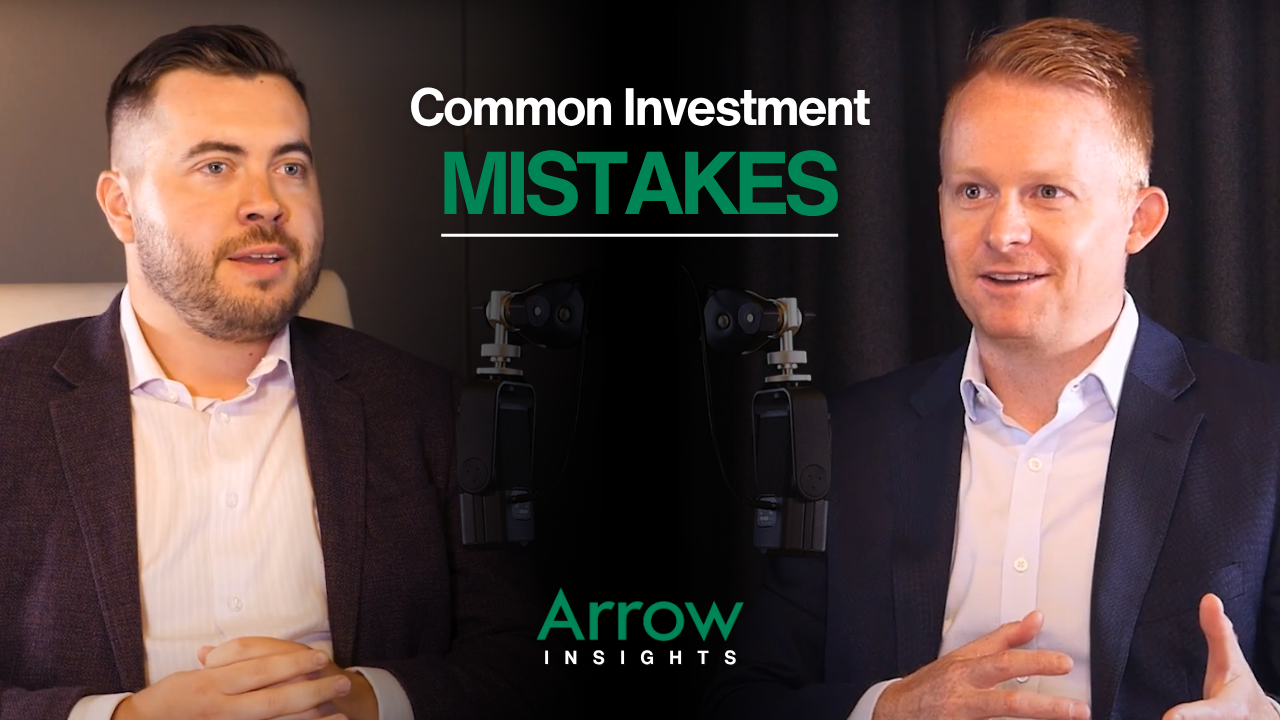
If you have questions about your own investment strategy please contact our team. We can help you review your portfolio and align it with your long term goals.
General Advice Warning:
Any general advice on this page does not take account of your personal objectives, financial situation and needs, and because of that, you should, before acting on the advice, consider the appropriateness of the advice, having regard to your objectives, financial situation and needs. Information contained on this page was correct at the time of posting.