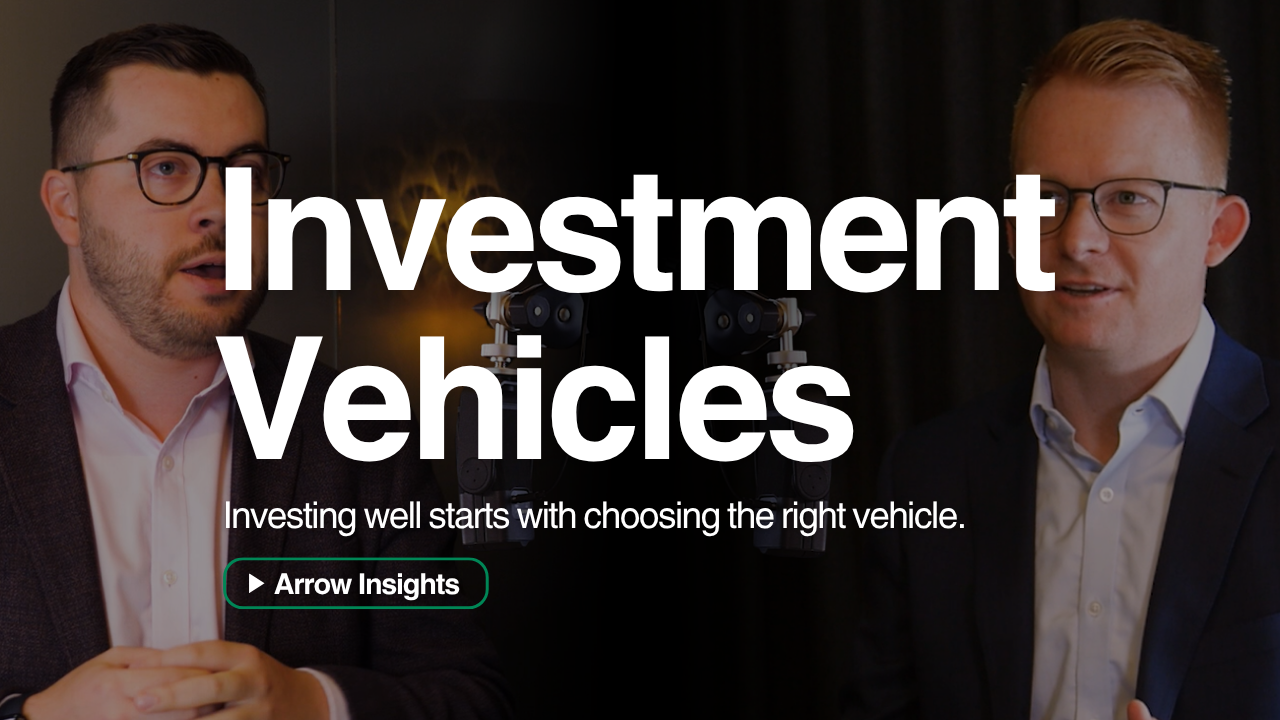
Investment Vehicles | Arrow Insights | Ep 20
When investing, it’s not just about what you invest in, it’s also about how you invest.
In this video, Seton Leggett and Ryan Synnot explain the most common investment vehicles using a simple transport analogy: different vehicles exist for different purposes, and the same is true when building an investment portfolio.
The key investment vehicles explained:
Shares
Ownership in a single company, with the potential for capital growth and dividends — but higher risk if not properly diversified.Bonds
A form of lending to governments or companies, typically providing more defensive, income-focused returns.ETFs (Exchange Traded Funds)
A simple way to access instant diversification through one investment, often tracking major market indices like the ASX 200.Managed Funds
Professionally managed portfolios that can use more active or specialist strategies, sometimes targeting specific markets or outcomes.Closed-End Funds
Long-term investments commonly used for property, infrastructure, private equity and other private assets, where capital is committed for a set period.
Where should investors start?
Ryan explains why ETFs are often the most accessible entry point for many investors, but also why the “best” investment vehicle depends on your goals, timeframe and risk tolerance.
Watch the full video to understand how each investment vehicle works and how they may fit into your portfolio.
General Advice Warning:
Any general advice on this page does not take account of your personal objectives, financial situation and needs, and because of that, you should, before acting on the advice, consider the appropriateness of the advice, having regard to your objectives, financial situation and needs. Information contained on this page was correct at the time of posting.