What happens when I'm no longer here? | Arrow Insights | Ep 15
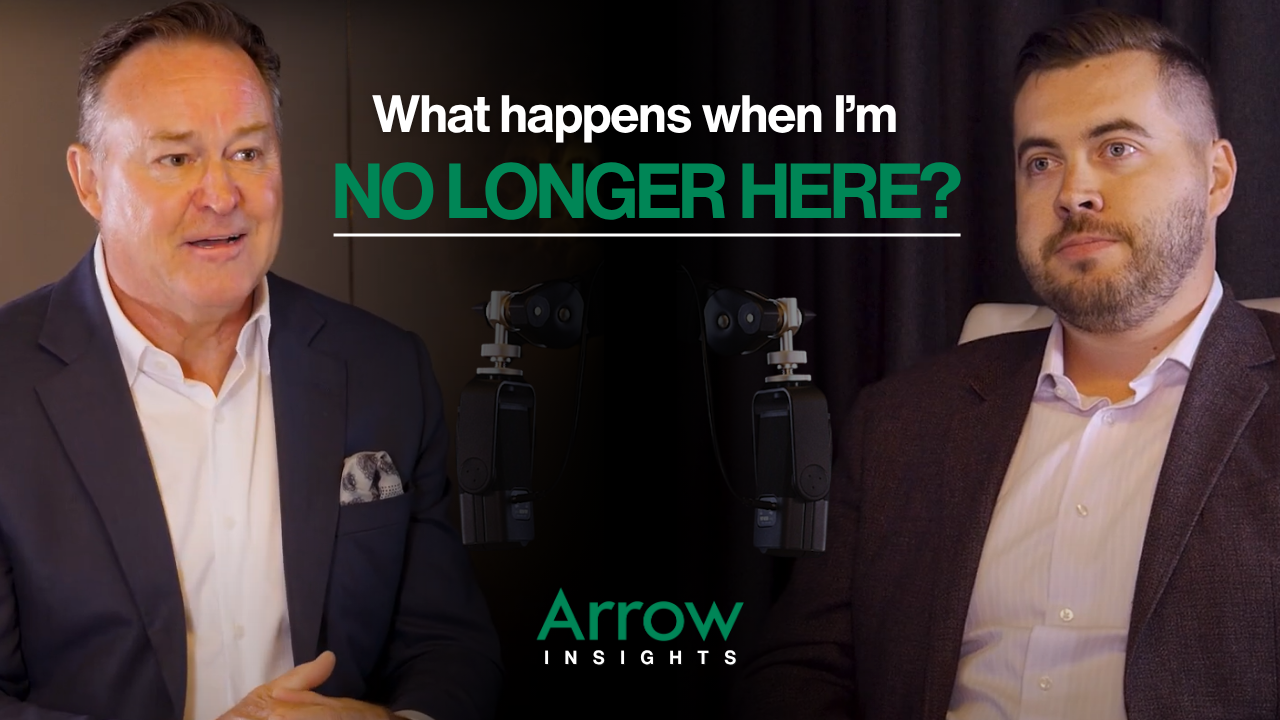
Planning for the unexpected isn’t easy, but it’s one of the most important steps in protecting your loved ones. In this episode, Ryan Synnot is joined by Executive Chairman Peter Leggett to unpack the key elements of estate planning—covering everything from wills and testamentary trusts to powers of attorney and life insurance. Together, they explore how thoughtful planning can ensure your assets are passed on smoothly and your family is supported emotionally and financially.
Whether you’re preparing for the future or helping a parent navigate these decisions, this episode offers practical guidance and real-life insights. Peter shares the conversations he's had with his own family, and highlights why now is the time to act—not when it’s too late. It’s a powerful reminder that legacy isn’t just about money; it’s about clarity, care, and communication.
Transcript:
Introduction
Ryan Synnot:
Today we're talking about a very important but sometimes uncomfortable topic—what happens when I'm not here. It's very important for our clients to have everything in order, both financially and emotionally, so that when they inevitably pass, everything transitions smoothly over time.Understanding Wills
Ryan Synnot:
Let’s talk about wills. A will is obviously a crucial legal document. Can you take us through some of the key considerations when preparing a will for a client and what’s involved in the process?
Peter Leggett:
Thanks, Ryan. It’s good to be here. As you know, this is one of my favourite topics. A will is a legal document that articulates how you want your assets—your estate—to be distributed upon your death.
It’s important to specify what assets are involved, how you want them distributed, to whom, and whether you want an equal distribution to children or grandchildren, or gifts to charities. Wills are essential.
An interesting statistic: in Australia, as of 2025, only 42% of Australians have a current or valid will. That means more than one in two people either don’t have a will or have an invalid one. And here’s a lesser-known fact: marriage actually cancels out a previous will.
Wills are about determining how, why, and to whom your assets are to be distributed.Testamentary Trusts
Ryan Synnot:
One of the things I often hear you talk about in client meetings—which not everyone may understand—is testamentary trusts. I know I don’t fully understand it myself, but I hear you say it can add an extra layer of protection within the family. Can you elaborate?
Peter Leggett:
A testamentary trust is a clause written into someone’s will. Most wills today don’t include testamentary trust clauses, but they can be very beneficial, especially if the estate is valued over a million dollars.
There are several reasons to include one:Asset Management Post-Distribution – It provides control over how assets are managed rather than simply being handed over.
Asset Protection – It offers protection under both commercial and family law.
Tax Effectiveness – It allows the use of a broader range of beneficiaries, including minors, at regular marginal tax rates.
Intergenerational Wealth Transfer – Trusts can last up to 80 years in Australia, allowing for thoughtful, long-term planning.
We strongly encourage discussing testamentary trusts with your estate planning lawyer.
Powers of Attorney
Ryan Synnot:
Moving on to Powers of Attorney—why would someone put one in place and what powers does it give?
Peter Leggett:
Most people in Australia have heard of Powers of Attorney but don’t really understand what they mean. In simple terms, they allow someone to step into your shoes and act on your behalf legally.
There are several types:Enduring (or Financial) Power of Attorney – Commonly used within families. It allows someone to sign legal documents, do transactions, etc., if you're overseas, ill, or incapacitated.
General or Specific Power of Attorney – For a specific task or timeframe, e.g., signing a property document while you’re overseas.
Medical Power of Attorney – Allows someone to make life-care decisions, including the ability to withdraw life support. Not many Australians have these, but they’re deeply important and emotional to consider.
Having these conversations with your estate planning solicitor is crucial.
The Role of Insurance and Superannuation
Ryan Synnot:
If we’re thinking about younger demographics, what role can insurance or superannuation play in planning for an early death?
Peter Leggett:
Life insurance, whether held personally or inside super, is particularly important for families with young children. It bridges the financial gap if someone passes away prematurely.
It can help pay off a mortgage, cover school fees, provide living expenses, or allow a non-working spouse to maintain the household. Super balances are growing significantly, and many people have life insurance within their super as well. It’s a critical area to consider—do you have sufficient assets or insurance to protect your family if something unexpected happens?Communicating Within the Family
Ryan Synnot:
These conversations can be quite hard and emotional. In your experience, how important is it to communicate these things within a family?
Peter Leggett:
It’s very emotional. We don’t want to think or talk about death—ours or our loved ones’. Yet this is part of life, and bad things do happen, often unexpectedly.
Often there’s been little or no conversation in a family—even between spouses—about what each would want. That’s why we hold family succession planning meetings. You’ve been part of many, Ryan. We ask open-ended questions about what’s in people’s hearts and minds if the worst were to happen, and then we compare that to their current affairs to see what gaps need fixing.
Open and honest conversations are critically important. We encourage people to start these discussions—and we’re happy to help guide them.Questions to Consider
Ryan Synnot:
What sort of questions should viewers consider when thinking through their own affairs?
Peter Leggett:
It’s a great question. Most people don’t get excited about estate planning. They get excited about the footy!
I saw a cartoon recently that summed it up beautifully: a father gesturing to a mess and saying, “One day, son, all this will be yours.”
People should ask themselves: are my affairs a mess that someone else will have to deal with? Are my children going to inherit a problem I never got around to sorting out?
In my own family, we recently did a cleanout—physically and emotionally. We moved, went through old things, and even passed on some family history and documents to one of our kids who will be the custodian for the next generation. These kinds of conversations are important.Final Thoughts
Peter Leggett:
To wrap up—there are a lot of considerations around what would happen if I’m not here tomorrow. Seek advice. Talk to your family. Start getting your affairs in order the way you want them. Plan as if something might happen tomorrow—and then plan to live to 100.
Ryan Synnot:
Thank you, Peter. Insightful as always.
And to everyone at home, thank you for tuning in to another episode of Arrow Insights. If there’s any information you’d like more detail on, please feel free to get in touch with your Arrow Adviser.
General Advice Warning:
Any general advice on this page does not take account of your personal objectives, financial situation and needs, and because of that, you should, before acting on the advice, consider the appropriateness of the advice, having regard to your objectives, financial situation and needs. Information contained on this page was correct at the time of posting.