
Strategy Talk | July 2018
Responsible lending has been a hot topic in Australia this year. What is it and why does it matter?
Your identity is valuable. Do you take appropriate action to keep it safe?
A special offer and insight into the breathtaking country of Japan, all in this month's edition of Strategy Talk.

WHAT IS RESPONSIBLE LENDING AND WHY DOES IT MATTER?
Whether it’s due to over-enthusiastic lenders or desperate borrowers, failure to adhere to robust lending standards can land some borrowers in serious financial distress. In many cases the difficulties experienced by these borrowers could have been avoided if the lenders had complied with their responsible lending obligations.
In brief, this means inquiring into a borrower’s financial situation and requirements, verifying the information supplied, and making an assessment as to whether or not the credit contract is suitable for the borrower. Ideally, the lender should also consider the ability of the borrower to maintain loan payments if there is an increase in interest rates. This is a common pathway into mortgage stress – the situation where loan repayments take up too large a fraction of household income.
The Inquisition
In the past, lenders often relied on loose assumptions of household expenditure when estimating a borrower’s financial commitments. That’s no longer the case, so if you’re looking for a new loan or to refinance an existing one, be prepared to provide the following information and documents:
The amount and source of your income, and duration and type of employment. This will need to be documented via payslips or through bank statements and tax returns if you are self-employed.
Your fixed expenses such as rent, other loans, credit cards, child support, insurance premiums and school fees.
Your variable expenditure, including food, holidays and entertainment.
Your age and number of dependents.
Details of your assets with a focus on financial assets.
Information on any foreseeable changes such as retirement.
You can also expect your prospective lender to delve into your credit history.

If you are using the loan to buy an investment property make sure you disclose this. You will likely face a higher interest rate, but don’t be tempted to deceive the lender. They are adept at detecting so-called ‘occupancy fraud’. You may also need to come up with a bigger deposit on an investment property purchase. This will decrease the sum you can borrow, limiting the price range in which you can buy.
Age needn’t be a barrier to taking out a home loan. However, anyone borrowing with a likelihood of retiring before the loan is paid off needs to have an exit strategy. This could be paying off the loan with superannuation, downshifting to a cheaper home, or even taking out a reverse mortgage.
Tighter adherence to responsible lending practices could likely lead to a reduction in the amount that people can borrow. However, this reduction in the amount of money flowing into the housing market should dampen down growth in house prices. Overall, more responsible lending may not have a major impact on housing affordability, but preferably see a reduction in the number of households experiencing mortgage stress.
Prepare ahead
Having answers to all the questions and the right documentation will come in handy when it’s time to apply for a loan. If a new loan or refinancing an existing one is on your radar, ask us to help you ahead of time. If you were not aware, our finance solutions service has access to many types of financing solutions and from multiple lenders including all four majors, offering various products and pricing solutions.
7 TIPS TO PROTECT YOUR IDENTITY
We are constantly hearing reports about the rise of personal fraud in Australia, but have you ever looked at the figures? The federal government’s website dedicated to monitoring and reporting scams, Scamwatch, tells us that there were 161,572 reports of Australians being scammed out of more than $89 million dollars in 2017!
15,697 were victims of identity theft. These people had their personal details stolen which were then used to borrow money or incur debts in their names.
Avoiding identity theft not only causes financial loss, but can severely affect your credit rating into the future. Securing your identity is usually a matter of common sense but there are some other additional ideas that will help to keep your money safer:

Take out all the contents of your wallet or purse and copy it all – back and front. Keep the copy in a separate safe place together with the phone numbers of your banks and credit card issuers. Now you are prepared to report a loss quickly.
Put a lock on your mailbox to prevent personal mail being stolen.
Immediately report missing money or unusual account activity to your financial institution – even if it’s a small amount. Fraudsters locate bank accounts by depositing or withdrawing small amounts from random account numbers to determine if the account is current. Once confirmed they swoop in for large amounts – or the lot!
Ensure your bank and credit providers have your current contact information. Computer systems are more sophisticated allowing banks to detect unusual buying patterns. If they can contact you promptly, they will be able to put a stop on a card if suspicious activity occurs.
If you buy online, use a prepaid credit card and deposit enough to cover your purchase. This will put a cap on how much can be stolen.
If you are asked for your driver’s licence as ID show it but don’t let anyone without authority record the details. Your licence is a de-facto national ID card.
If you are phoned by someone purporting to be from a government department or financial institution asking for personal details or to pay a bill that you’re not aware of, ask for their details – name and phone number – and tell them you will call back. If they won’t give you these details, hang up.
Our online lives have provided thieves with new avenues to separate you from your cash and credit. Common sense and vigilance can reduce the risk of you adding to this awful statistic.
A MUST VISIT:
JAPAN

Japan has a fascinating and multifaceted culture; on the one hand it is steeped in the deepest of traditions dating back thousands of years; on the other it is a society in a continual state of rapid flux, with continually shifting fads and fashions and technological development that constantly pushes back the boundaries of the possible. This is part of what makes it such a fascinating country to visit. If you are looking for something different you are sure to find it here!
Japan is packed full of iconic sights, from Mount Fuji to the ten thousand red gates of Fushimi Inari Shrine; from the “ floating” torii gate of Miyajima to the giant neon signs and garish facades of Osaka’s Dotonbori district. Brimming with exciting, inspiring hands-on activities whether you're interested in traditional arts, arts and crafts, history, sport, gardens, festivals, pop culture, or perhaps something a little more niche – we can organise an experience to suit you. From a private audience with a trainee geisha to a lesson in talko drumming: from tea at a Maid Café to the ancient art of tea ceremony: there is almost no end to the hand-on experiences that can be arranged throughout Japan, whatever your age, interests or budget. Just let us know what takes your fancy and we'll work with you to create your perfect holiday.
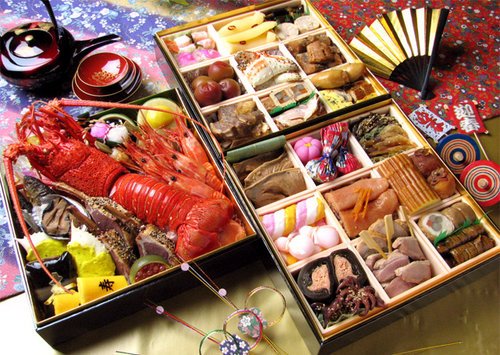
When it comes to food, Japan is about a whole lot more than just sushi! Japanese cuisine is one of the best things about a trip to Japan and for many visitors, it one of the main events. Careful preparation and meticulous presentation are crucial elements of Japanese cuisine. Food is an art form and even the simplest dishes are often prepared by chefs who have trained for many years. Though principally famous for dishes like sushi, rice, noodles, tempura, Kobe beef and teriyaki chicken, there a veritable plethora of other superb dishes out there to try. Ask anybody about their recent trip to Japan and the conversation almost always includes talk of the local food. In fact, for many Japanese travelling outside of their home-towns, food is often one of the primary motivators for travelling.
Shinto is Japan’s indigenous religion, with thousands of deities (or kami) and a heavy focus on ritual. Buddhism arrived in Japan from the Asian mainland in the 6th century and is based on the teachings of Buddha. For centuries these religions have been intertwined in Japan and today most religious Japanese consider themselves adherents to both. Experiences on offer to visitors with an interest in Shinto and/or Buddhism. Spend a night in shukubo temple lodgings; a fantastic way to understand the simple, traditional lifestyle of Japan's Buddhist monks. Get closer to Japan's spiritual heart by joining Yamabushi mountain priests for a morning meditation service. Enjoy an inspiring introduction to meditation with a Zen priest in a tranquil temple setting or a day trip to the fascinating temple complex of Eihei-ji for an insight into Buddhism. Hike to the top of sacred Mount Hiei, home of Buddhism's esoteric Tendai school.
Etiquette and Cultural Differences:
Many tourists will agree that learning about other cultures is one of the greatest joys of travelling. Learning a few important customs of the Japanese people will ensure that you are seen as respectful by locals and will help make your visit more enjoyable:
Do :
Bowing when meeting people is seen as respectful. Women should bow with their hands together in front of them and men should bow with their hands to their sides.
When giving things to someone, it’s considered polite to hand the item over with both hands.
In Japanese society, the elderly are given special respect. Amongst other privileges, note that some seats (“silver seats”) on trains are reserved for the disabled and the elderly.
Make sure you follow the special cleansing procedure before entering a Shinto Shrine or a Buddhist Temple.
There are very few trash cans in public so you may have to carry around your trash for a while before finding one.
Don't :
Don’t walk on a tatami mat wearing shoes or slippers. Japanese homes and traditional Japanese hotel rooms have a genkan where you should take your shoes off before stepping back onto the boarded area of the floor.
Don’t stand your chopsticks upright in a bowl of rice as that is how rice is offered to the dead.
Avoid physical contact in public. You will notice that you do not see Japanese people kissing or hugging.
Avoid speaking loudly in public. Many trains even have signs advising you not to use mobile phones while on board.
Japan is a wonderful place to visit at any time of year, but the period from September to November is particularly pleasant. Japan’s hot summer cools down in early September, giving way to comfortable temperatures that last all the way through into late November. Late September and early October are popular for families getting away in the school holidays, while mid-October through to late November are great times to catch the changing of the autumn leaves, providing a dramatic backdrop to Japan’s temples, shrines and other sights. Holidays can be small groups, exclusive private journeys or self-guided adventure.
Tipping doesn’t really exist in Japan, and leaving tips can often be seen as an insult. The Japanese customer service is quite legendary, and you certainly don’t need to bribe the staff to do their job properly.
Travel Counsellors
Julie Moore - julie-moore@travelcounsellors.com.au - travelcounsellors.com.au
This 2-week trip, The Best of Japan in Style, includes all the must-see sights on a first trip to Japan, plus a couple of lesser known destinations. You will get to experience all the contrasts of Japan, from the bright lights of Tokyo to the temples of Kyoto; the mountain charm of Takayama to the relaxing island of Miyajima.
Itinerary overview:

3 nights in Tokyo, including tour of the city with an architecture expert.
2 nights in Hakone, staying in luxury Japanese inn, soak in hot spring baths and catch a glimpse of majestic Mt Fuji.
3 nights in traditional Kyoto, including private guiding morning, geisha experience, tea ceremony, cookery class and reservation at an exclusive tempura restaurant.
2 nights in Hiroshima, with a day of private guiding for an excursion to beautiful Miyajima island.
1 night in Osaka, with evening street food tour.
2 nights in Takayama, staying in a traditional ryokan inn.
1 final night back in Tokyo before flying home.
Trip includes:
Mix of 4 and 5 star accommodation, including two traditional Japanese style stays.
Breakfast each day and 3 evening meals.
Private airport transfers
All transport between destinations, by first-class rail.
Transport pass for local train/subway trains.
A number of private guiding sessions and hands-on experiences/activities
Personalised Info-Pack with comprehensive instructions for getting around Japan.
In-country English-speaking support by phone and email.
Price: from $9980 per person twin share, excluding flights. Single traveller $12,980, excluding flights.
Note: Trip can be tailored to suit your needs – very flexible!