Suitability of SMSFs | Arrow Insights | Ep 13
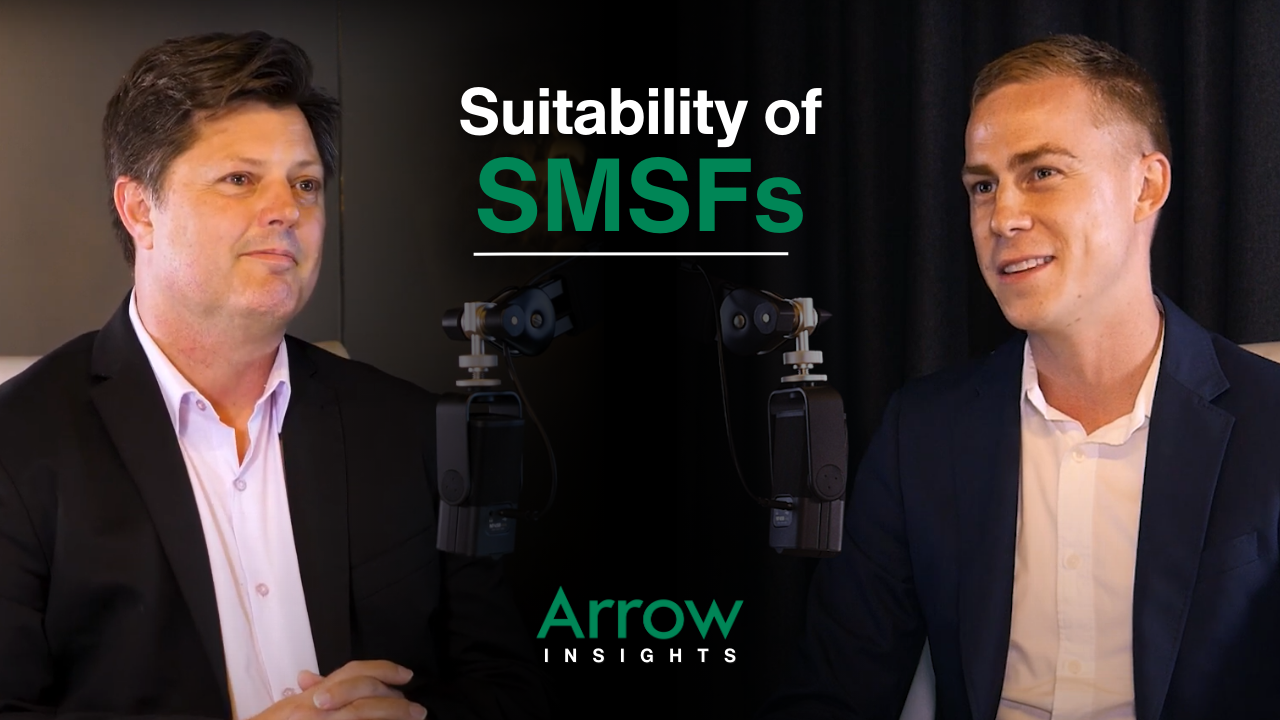
In this episode of Arrow Insights, Kreston Leggett sits down with Mathew Ashton to unpack the complexities of self-managed super funds (SMSFs). With over $1 trillion invested across more than 600,000 SMSFs in Australia, these structures are increasingly popular—but are they right for everyone? Kreston and Mathew delve into who SMSFs are most suited for, the typical entry requirements, and how control, flexibility, and direct investment options can be both empowering and demanding for trustees.
They also explore the realities of managing compliance, trustee responsibilities, and the impact of lifestyle and business circumstances on fund suitability. Drawing on real-world client examples—both successful and cautionary—Mathew provides a grounded perspective on when SMSFs can be a strategic advantage, and when they might lead to complexity, cost, or regret. Whether you're considering an SMSF or advising someone who is, this episode offers balanced and practical insights into one of Australia’s most talked-about retirement vehicles.
Transcript:
Introduction
Kreston Leggett:
Welcome to another edition of Arrow Insights. My name is Kreston Leggett, one of the private client advisers here at Arrow Private Wealth. Today we're here to talk about self-managed super funds, or SMSFs for short. And today joining me, I've got Mathew Ashton, who brings a wealth of experience in this area. So welcome Mathew.
Mathew Ashton:
Thanks Kreston, great to be here.
Who Should Consider an SMSF?
Kreston Leggett:
So Matt, as of last quarter, there is over $1 trillion invested within the self-managed super fund space across about 630,000 funds. So they're clearly a popular investment vehicle for Australians, but they're not necessarily for everyone. So could you provide some insight as to who might be appropriate to use these sorts of vehicles?
Mathew Ashton:
It's certainly a topic on a lot of people's minds. Most of the new clients that I see, roughly about 70%, actually ask the question about whether a self-managed super fund's for them. And there's a number of factors that we look for.
One can be as simple as fund size. So if they have any less than $500,000, we won't touch them because you need a quantum of assets to make the fixed costs of running a self-managed super fund worthwhile. And then it's also about, you know, how involved they want to be in the process. So if they want control, they want access to some bespoke investment opportunities, maybe they want to do direct property—those are some of the things we're looking for for somebody who wants a self-managed super fund. But otherwise, they might not be appropriate for them.
Kreston Leggett:
What are some of the other factors that might make an SMSF suitable for someone, in respect of some of those objectives that you just touched on?
Mathew Ashton:
Yeah, I think it really works quite well when somebody has some sort of small business where they can use the small business exemptions to maybe rent a property that's associated with their business, and then they can get some real value out of growing their business and releasing some capital, as well as growing their self-managed superannuation fund. So small business owners are a segment where it might be appropriate.
Kreston Leggett:
And then on the flip side, who might it not be appropriate for?
Mathew Ashton:
Yeah, so anyone who's not willing to sort of take advantage of the extra requirements that come from running a self-managed super fund. You've got to step into the shoes of a trustee, you've got to make decisions about how the investments are made, there's a lot of paperwork, there's a lot of signing different documents, making sure you do the minutes and things like that. So that might not be appropriate.
Also if you're highly dependent on other individuals to make all investment decisions, you're not comfortable, or you want things that are simple—then a self-managed super fund is probably not right for you.
Understanding Compliance Obligations
Kreston Leggett:
That's a really good perspective. What about the area of compliance of the funds? You often hear that that's a large component of fulfilling the trustee responsibilities. We certainly see that in terms of the administration support that we provide. And it can be simple but can also be extremely complex and time-consuming, as you've indicated. Could you just provide some additional context on that?
Mathew Ashton:
Yeah, I think if you feel like you have a busy lifestyle, those factors that I spoke about before in terms of the compliance and the documentation—they can really become a burden on your life, and not really suitable for clients. So people can get behind if they're not actually meeting their obligations, not providing information in a timely manner. You can get to a situation where your self-managed super fund will be non-compliant.
And if you're not very, very careful with making sure your assets are segregated away from your own personal assets—maybe you think, “I'll pay for something, oh it'll be okay”—you can really run into trouble. So best to keep away from self-managed super funds in that instance.
Real-World Experiences with SMSFs
Kreston Leggett:
That's a really good point there, Matt. Do you have any examples of perhaps a case or a situation where you've dealt with a client where the SMSF has been really useful and valuable and clearly appropriate for their circumstances and objectives, but perhaps also on the other side where perhaps it's fallen short or there’s been complexity or issues that have arisen from running with that strategy?
Mathew Ashton:
Yeah absolutely, Kreston. We've had a situation where there was a young couple in their mid-40s who were doing some expansion plans with their business. They needed some more factory assets that they needed to fund, and they had a reasonable size—they had about a million dollars in superannuation. So they were able to set up a self-managed super fund and use their super assets to fund that purchase, and it really helped expand the business into the next phase.
In their context, they had a long time horizon, they had a growth mindset, and they were really experienced in the property sector as well. So it made sense, it ticked all the boxes.
Kreston Leggett:
And what about on the other side of the coin, where you've seen the pitfalls of perhaps running a self-managed super fund—in terms of a real-life case?
Mathew Ashton:
Yeah, well there's a few. And it really comes around the idea of succession and what happens as you get older or if your circumstances change. We've had situations where clients had set up a self-managed super fund in their 30s and 40s and built it over a period of time.
But then, in the instance I’m thinking of, we had a client who was unwell and needed to access a fair chunk of their superannuation money—and they didn't have the liquidity they actually needed to deal with that. So they were tied up in a self-managed super fund while they were taking assets out, and the costs started to rise. So not having that succession plan, particularly when things go wrong, is really important.
Final Thoughts and Wrap-Up
Kreston Leggett:
Yeah, that's a really good insight Matt. So if we come back to summarise in terms of suitability: clearly it's a balance between understanding your financial position and the objectives that you're setting with respect to your superannuation strategy, but also recognising that your priorities and your circumstances may change over time.
So it's important to recognise the commitment from the start in terms of the complexity, the responsibilities from a time perspective, as well as perhaps the elements of investing and succession as you've noted. What are your sort of final points on this matter before we wrap up?
Mathew Ashton:
Yeah, you've done a good summary there, Kreston. Really, when you're thinking about a self-managed super fund, you need to ensure that you understand and have a good handle on what your financial position is, and what your plans are—what you actually want to achieve out of having a self-managed super fund.
You need to want to embrace complexity in your life so you can make sure that running a self-managed super fund is going to fit your lifestyle and what you actually want to achieve. It's not a magic bullet, it's not for everybody. And they’re really the two major points we assess when we’re making recommendations.
Kreston Leggett:
Thank you very much for your time today, Matt. That was really insightful for me.
Mathew Ashton:
Thanks, Kreston. It's been a pleasure.
Kreston Leggett:
Well, that's a wrap for today's episode. We hope you found that very insightful. And if you do have any questions or feedback, please feel free to send that across to the team—we would be happy to discuss further with you. Look forward to hosting you in the next session of Arrow Insights.
More Episodes



Latest Insights




General Advice Warning:
Any general advice on this page does not take account of your personal objectives, financial situation and needs, and because of that, you should, before acting on the advice, consider the appropriateness of the advice, having regard to your objectives, financial situation and needs. Information contained on this page was correct at the time of posting.