
Client Scammed. How we recovered $200k | Arrow Insights | Ep 14
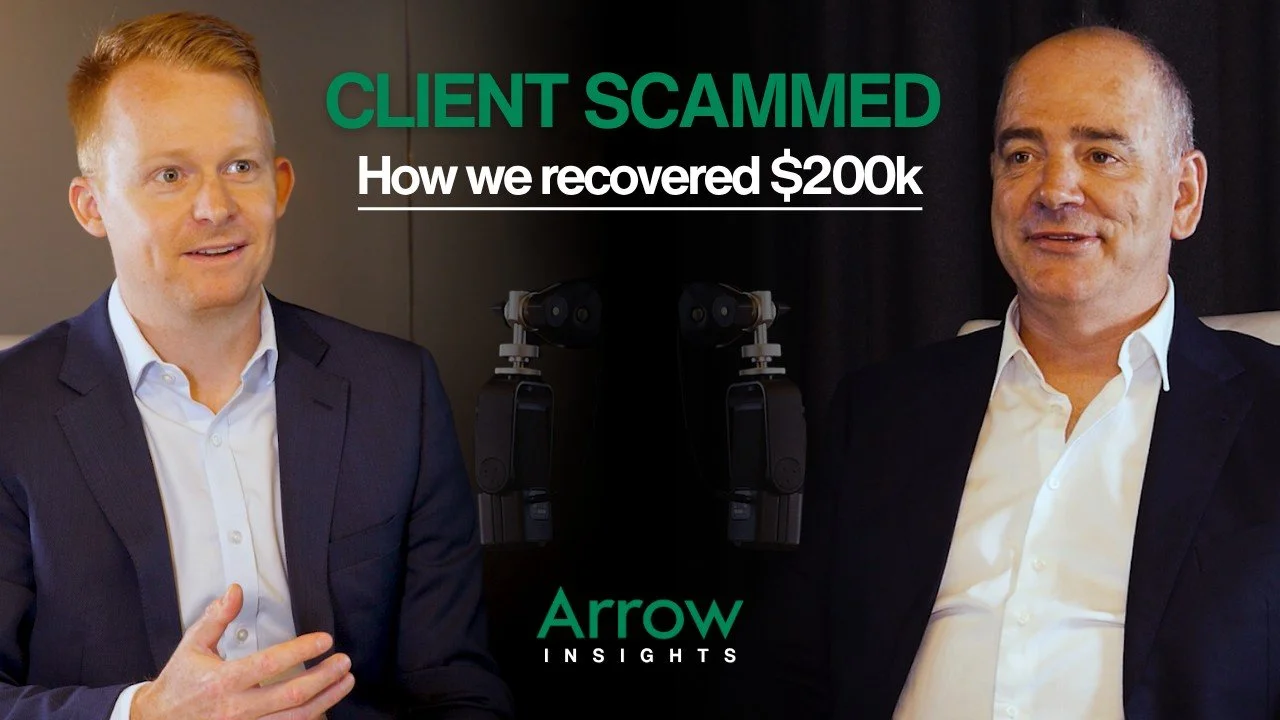
In this episode of Arrow Insights, Rod Runco is joined by Seton Leggett to unpack the growing threat of scams facing everyday Australians. With phishing attempts, AI-generated phone calls, and highly convincing frauds becoming more common, Seton shares insights from the frontlines—including a powerful real-life story where we helped recover $200,000 for a scammed client. Their discussion highlights just how sophisticated modern scams have become, and how even cautious investors can fall victim.
From warning signs to watch for, to practical steps for prevention and what to do if you suspect fraud, this episode is essential viewing for anyone wanting to protect their finances. Seton and Rod also explore how financial professionals can act as advocates, guiding clients through recovery and escalation processes when things go wrong. It’s an empowering and timely conversation that reminds us: vigilance is key, and support is available.
Transcript:
Rod Runco:
Welcome to the latest edition of Arrow Insights. I'm Rod Runco, a Private Client Adviser here at Arrow Private Wealth. I'm here today to talk about a subject that affects many people on a daily basis and that's the issue of scams. I'm here today to talk to Seton Leggett about the subject and get his input.
Seton Leggett:
Yeah, that's right Rod. Scams—it's something affecting all of us almost every day, or at least for me, it feels like I'm receiving a text message or a phone call or an email, something that is unexpected. And oftentimes you can see it's a scam upfront, but unfortunately for many people these are things that get through and they're affecting many, many Australians.
Rod Runco:
I hear what you're saying, Seton. I receive these like most people almost on a daily basis. It's really annoying. So what sort of scams are we talking about?
Seton Leggett:
Well, according to Scam Watch, which is part of the National Anti-Scam Center, which is part of the ACCC—it’s a mouthful—there are a whole range of different scams affecting Australians every day. The number one scam, by dollar value, is investment scams. That’s people being promised an amazing investment opportunity—often very professionally put together, fake documentation, fake websites, fake contact details—and they hand over their money. It’s a great way to make money—off you come and you've invested $100,000 into what is a scam.
And these are so successful because typically the sums of money are quite large. The second most profitable scam—for scammers, at least in Australia—is the romance scam. And then finally, a false billing scam.
Rod Runco:
Absolutely staggering numbers, aren’t they Seton? How ordinary, everyday, hardworking Australians get caught up in this is amazing. I always tend to think if it’s too good to be true, it probably is. But people are still seduced despite our cynicism. You've highlighted quite a number of scams. Can you give me an example of a real-life one, if you have one?
Seton Leggett:
Yeah, I can. So we had a client circumstance a few years ago where she was contacted by “Telstra” to upgrade her NBN service. Speeding up the story—she ended up having some software installed on her computer. The scammer went through and set up internet banking on her savings account, which had not previously been established. And the scammer, over the course of 48 hours, had withdrawn 20 times approximately $10,000. So that's a total of $200,000 over the course of 48 hours.
It’s a staggering amount for most people. So she contacted the bank after the 48 hours, which is the right thing to do as soon as you suspect you've been scammed. The bank froze her account and did their attempts—whatever that is—to retrieve her money. Unfortunately, they weren't able to retrieve the money, and the bank closed that case down.
Now, we didn't hear about this—and the client was, and you can appreciate this—the client was embarrassed that they had fallen for this scam. Absolutely, you can appreciate that. I think that would be a natural human reaction. She was embarrassed, and it was only six months later that the client had made us aware of this circumstance.
Anyway, we felt like we had an obligation there to jump in on her behalf. And we did our own research into what had happened, and we represented her back to the bank, where we helped draft some letters and put that to the bank to assist.
Anyway, long story short, we were delighted that we were able to recover that money back for the client. That was the bank who claimed that they were ultimately responsible for that.
Now, by no means am I suggesting this will be the case for all scams, but certainly in the specific circumstances here, the bank claimed it was their responsibility and ultimately reimbursed our client. And you can imagine—she was absolutely delighted with that.
Rod Runco:
Look, that’s obviously an outstanding result, Seton. The client got her money back and got service from her advisor beyond probably what she would have expected. So, have we got any tips for how to avoid this for ourselves in the future?
Seton Leggett:
Absolutely. So, according to Scamwatch, which I’ve already introduced:
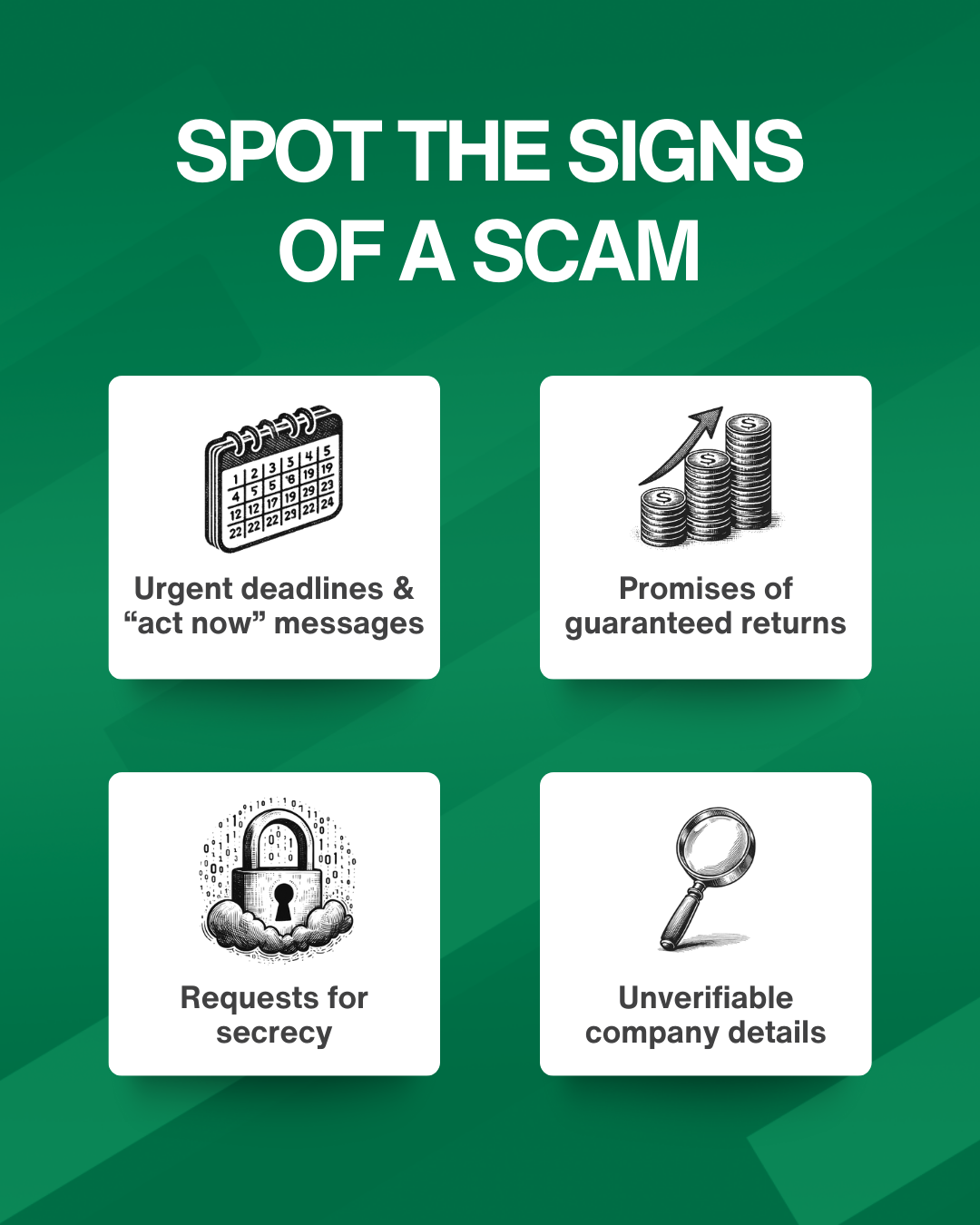
First thing: verify unsolicited phone calls.
Scammers are also using AI—this is a more recent addition. For example, they can put on a professional Australian accent. So you can imagine a scammer who resides overseas may not speak—in an Australian accent—but using AI, they're able to filter their own voice, and the AI would convert that into a professional Australian voice. And we feel like we've experienced that here at the office phone line.
The next one: do not click links or open attachments that you're not sure are safe. If you've got any doubts, just don’t open.
Deals that seem too good to be true—they usually are.
Take extra caution when you’re pressured to act quickly or pay in an unusual way. If you're feeling some heat—why are they putting that pressure on you?
Keep software and devices updated—a more modern issue, but you know, keeping your phone, your laptop, your home computer—whatever it is—keep those devices up to date.
Don’t install software from unknown sources.
Regularly review your financial statements—you may have been scammed and just not know about it, and if you're not looking at your financial statements, you won’t know.
And finally, enable two-factor authentication—an absolute must these days in your personal life and in your business. It's the best way to put some resistance up to scammers.
Rod Runco:
Great advice, Seton. So what would you suggest we—or our clients—do if they think they’ve been scammed? What should they do?
Seton Leggett:
First thing is: you must notify your financial institution—your bank. Let them know and they can put a freeze on your bank account or whatever it is they’re accessing.
Contact professionals for guidance in dealing with financial institutions. So if we use the example I gave earlier, our client didn’t have a lot of experience in dealing with large financial institutions. Well, here at Arrow Wealth, we deal with large financial institutions on a daily basis. So we know how to deal with them and how to navigate those instances.
So reach out to your financial professional.
I think also—it’s okay to feel embarrassed. I think it’s a very natural reaction. But early reporting is key. So, while in the example I gave earlier the bank was unable to retrieve those funds immediately, in many cases they are able to pull those funds back.
So make sure you're reporting straight away.
If you're not happy with the bank’s response—or assuming it’s the bank you're dealing with—feel free to go and contact AFCA (the Australian Financial Complaints Authority).
And the final thing to do would be to report the scam on Scamwatch. It’s by making the authorities aware of the scam that helps them produce communications to the broader public and make other people aware that a certain type of scam is out there. And also, the things that the government could do to help shut them down, if possible.
Rod Runco:
Great advice, Seton. I hope you found this information session useful and that you've learned something. It's something we all have to be aware of. If after listening to this you've got any questions or queries, please feel free to reach out to your financial planner.
Bye for now.
More Episodes

Latest Insights




General Advice Warning:
Any general advice on this page does not take account of your personal objectives, financial situation and needs, and because of that, you should, before acting on the advice, consider the appropriateness of the advice, having regard to your objectives, financial situation and needs. Information contained on this page was correct at the time of posting.