
Strategy Talk | February 2019
It’s a fact that many Australian marriages come to an end, be it by divorce or death. While the emotional burden is huge, so are the financial consequences. This month in Strategy Talk we’re considering our options in this difficult time.
Whether you’re single or not, chances are you’re not spending enough time being active. The benefits of an active lifestyle are huge! We share some tips below in this month’s edition of Strategy Talk.

THE FINANCIAL EFFECTS OF DIVORCE AFTER 50
With Australians marrying later in life and staying married for longer, the median age of divorce has risen over the last 20 years. It now stands at 45.5 years for males and 42.9 years for females. Couples who remain together into their 50s experience a lower divorce rate than younger age groups, but even so this age group still represents around 30% of all permanent splits.

While divorce carries a heavy emotional burden at any age, the financial stakes for older divorcees can be greater, and the prospect of starting over more daunting than for younger people. The over 50s have often accumulated significant wealth. They tend to be focused on that final sprint to retirement, maximising super contributions before putting their feet up and commencing a superannuation pension. Retirement may also entail downsizing a home or a move to the coast or the bush. At all points along this path through later life, the financial consequences of divorce are substantial.
Given the major upheaval created by this event it’s critical to obtain professional financial advice right from the start. This will help to ensure the smooth separation of finances and a reduction in any unnecessary emotional pain. This doesn’t just apply to the end of formal marriages; the issues are largely the same when de facto relationships come to an end.
The checklist
At the end of a marriage or long-term relationship some issues require immediate attention while others can be left until a bit later. Urgent items include:
Resolving living arrangements and ensuring access to funds for daily expenses.
Establishing individual bank accounts and giving new bank details to employers.
Securing an adequate income and working out a budget.
Changing life insurance and superannuation death benefit beneficiaries.
Revising Wills and Powers of Attorney.
If dependent children are in the picture, their living arrangements and financial needs must be taken care of.
If property is held in a partner’s name, legal action may be required to prevent it from being sold prior to a property settlement.
Once these pressing issues are addressed attention can be given to:
Dealing with the family home - will it be retained, by whom and for how much?
How will superannuation balances be split?
How will the division of personal property be managed, taking into account both the financial and personal aspects of this difficult task?
In the case of a family business, will the business relationship continue?
Conflict or cooperation
Many couples manage their divorces cooperatively. For others it is a time of rejection, blame and conflict. But, even if a divorce can’t be amicable, it can often be handled in a mutually respectful way. Minimising the involvement of lawyers will help to avoid substantial legal costs, preferably to the benefit of both parties.

The next chapter
Many late-life divorcees will re-partner and establish happy new relationships. The financial aspects of re-partnering are many and complex, and even with the best of intentions, poor decisions, or even a failure to act, can have major financial consequences. For others, remaining single will prove more attractive. Either way, when life slips into a new and stable pattern, it’s time once again to seek out expert advice. We will be here if you need us.
MANAGING THE “SUDDENLY” OF “SUDDENLY SINGLE”
Shirley and Peter had been married nearly 37 years when Peter died in a car crash. At 62, Shirley was suddenly single and unprepared.
Peter had managed their financial affairs, but with his death, Shirley was thrust into a world she knew little about. Moreover, she was shocked to discover the true extent of their household debt!
Shirley knew their home was mortgaged, but had no idea the car was under finance. Nor had she known about Peter’s credit cards – one of which had funded their recent cruise-ship holiday.
Monash University reports that 34% of women over 60 are living in poverty.
Sarah was 30 when Jack ended their marriage. Suddenly single, she found herself supporting seven-year-old Ben on one income in a household accustomed to two.
Worse, Sarah’s budding career as a veterinarian was curtailed as she was forced to reduce her work hours to suit Ben’s school routine.
An RMIT study found that 59% of women believed their financial circumstances were negatively impacted by divorce or separation.
Shirley’s strategy
Under guidance from her adviser, Shirley borrowed against the equity in her home to pay off the car and card debts. While doing this, she re-negotiated her loan, securing a better interest rate. She was left with one payment each month instead of several.
This meant she could more easily manage her fortnightly income and ensure she had money put aside for her utility, car and living expenses.
Her adviser recommended that Shirley make a one-off post-tax contribution to superannuation. As a low-income earner, she qualified for the government’s Co-contribution Scheme which paid up to $500 into her super fund.
It was a relief for her to know that she could manage her day-to-day affairs while still contributing to her retirement.
Sarah’s strategy
Sarah’s priority was income. At a friend’s suggestion, she rented her spare room by advertising on a flatmate website. Unsurprisingly, many respondents were women in the same situation. After interviewing likely candidates, Sarah invited Belinda and six-year-old Toby to move in.
The two women shared child-minding and school pick-up rosters, and the additional income helped make up for the loss of her former husband’s wage. She was soon able to resume full-time work and continue building her career.
Sarah’s income was her most valuable asset so she arranged income protection and life insurance through a financial adviser.
Furthermore, she destroyed her credit card in favour of a debit card. She was back on track to setting up her own veterinary practice in a couple of years.
According to the Workplace Gender Equality Agency (WEGA) women’s wages are approximately 14.6% lower than men’s.
Women traditionally take breaks from work to raise children or care for elderly parents.
All this adds up to a reduction in income, financial security, and retirement savings. Sarah found that by rethinking her lifestyle and spending habits she could support herself and her son.
Older women like Shirley don’t have the same growth and income opportunities and must work with what they already have.
Regardless of what stage of life you are in, sound financial advice and strategic planning can set you on the path to financial independence and reducing the negative impacts of becoming “suddenly single”.
DON’T JUST SIT THERE!
Do you have a twelve-a-day habit? We’re talking seated hours, not cigarettes, although recent studies indicate that sitting too much and moving too little can be just as bad for your health.
The Victorian Government’s Better Health website suggests that sitting is the new smoking, and plenty of studies are backing up the claim. According to government stats, more than 60% of us do less than the recommended 30 minutes of daily exercise.
But it’s not just structured exercise we’re lacking.
Not so long ago, office workers communicated by walking to colleagues’ desks. Information was shared by hand-delivered memos (remember those?) and we physically attended meetings.
We went outside to buy lunch and – horrors – may have even eaten it outside!
Today’s world is one of remote connectivity. We email or instant message colleagues and attend meetings via video conferencing.
A new crop of office catering companies accept lunch orders via website or app and deliver it by courier directly to our desks – we don’t even have to get off our chairs for food!

As a population, we are moving less. We’re buying online where we used to visit shopping centres. We, who once walked or cycled to school, now drive our kids; and they spend hours chatting with friends online instead of physically meeting up with them.
Technology has aided and abetted us in becoming more sedentary than ever before – to the detriment of our health and well-being.
According to the United Kingdom’s National Health Service (NHS), excessive sitting is putting us at risk of all manner of diseases, the most common being obesity and Diabetes Type 2.
The NHS quotes sources from Melbourne’s Baker IDI Heart and Diabetes Institute claiming that too much sitting is thought to slow the metabolism. This in turn affects the body’s ability to regulate blood sugar, blood pressure and metabolise fat.
Other consequences may include conditions like varicose veins, sciatica, deep vein thrombosis (DVT) or more sinister ailments like heart disease and cancer.
So, if too much sitting is the problem, is standing the solution?
Well, yes and no.
Adjustable workstations enabling office workers to stand at their desks are a step in the right direction, but standing alone is not a panacea. Standing for hours can affect posture, and lead to neck, back and hip problems.
Movement is the key. Too busy to exercise, you cry? Fitting more movement into daily life isn’t as difficult as you might think.
Consider:
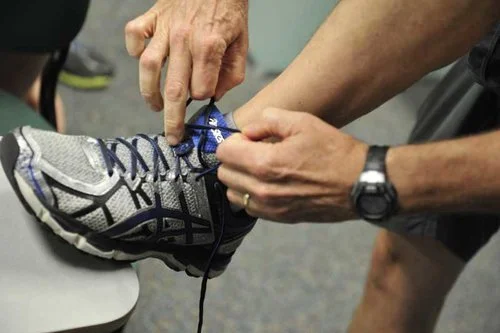
Taking the stairs instead of the lift.
Visiting colleagues’ desks.
Pacing while on the phone.
Setting an hourly timer reminding you to get up and walk.
Walking with the kids to school.
Organising walking meetings at work – it’s a thing, Google it!
Our bodies are designed for movement. Lack of movement causes muscles and bones to weaken and ultimately our health and mental well-being can suffer.
It’s like leaving a car idle in a garage for months. You can replace a car, but you can’t replace your body – technology hasn’t gone that far yet – so get up and move it!