
Market Summary | January 2021
MARKET OVERVIEW
The pandemic still looms large across the global economic landscape, with over 100 million confirmed Covid-19 cases worldwide at the start of February. The gradual rollout of vaccines is offering hope that a new normal can be achieved despite early logistical roadblocks and shortages in some regions. The Covid-19 situation in the US is improving while Europe is bringing new outbreaks under control.
Markets started the year strongly, however a steep sell off in the final few sessions of January saw indices retrace, resulting in modest results globally for the month.
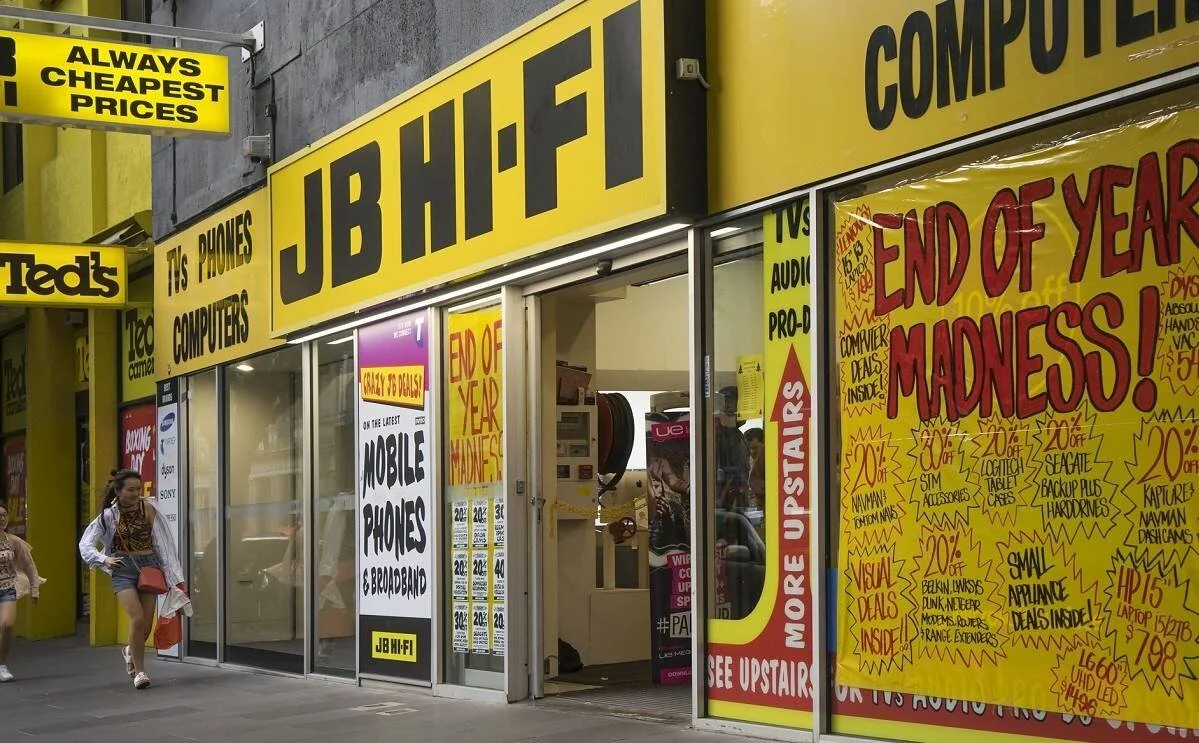
Australia’s demand for consumer electronics was strong in 2020
United States
In the US congress is negotiating President Biden’s proposed US$1.9 trillion stimulus package, which includes US$1,400 payments to low-income workers. Covid-19 vaccines have begun rolling out across the country as daily confirmed cases continue to fall. President Biden issued new executive orders to accelerate the production of vaccines and protective equipment, establish a Covid-19 testing board, and mandate mask wearing on public transport. US December quarter GDP rose 4.0%, in line with expectations, building on the large 33.4% rebound in the September quarter.
The US S&P 500 Index traded down through January before moving to fresh all-time highs in early February. Microsoft’s December quarter results beat estimates, revealing strong performance from Personal Computing, driven by home office and schooling needs. Alphabet (Google) also surpassed expectations, lifting revenue by 23% on the prior corresponding period, boosted by YouTube advertising, which delivered a 46% jump in revenue.
The S&P 500 Index (USD) returned -1.11%
The Dow Jones (USD) returned -2.04%
Asia
China has been among the frontrunners in the global vaccine race, with late-stage trials underway for the Sinovac-developed CoronaVac in at least 16 countries across Asia, Africa and Latin America. China is making hundreds of millions of doses available to low-and middle-income countries as part of its vaccine diplomacy push. With the new Biden administration installed, the US state department said it can “walk and chew gum” when it comes to fostering a more constructive relationship while also holding China accountable for human rights abuses and sustaining America’s military and technology advantage.
On the data front, it appears China’s economic recovery has hit a rough patch. The Caixin Manufacturing PMI fell to a seven-month low in January at 51.5, down from 53.0 in December and missing expectations of 52.7. Both output and new orders rose at softer paces, while export sales fell for the first time in six months due to the resurgence of Covid-19 infections globally.
The Hong Kong Hang Seng PR Index (HKD) returned 3.87%
The Nikkei 225 PR Index (JPY) returned 0.80%
The Shanghai Shenzhen 300 PR Index (RMB) returned 2.70%
Europe
The European Union imposed tougher restrictions on visitors from outside the bloc, with travellers from countries with a higher infection rate than the EU (more than 25 Covid-19 cases per 100,000 people over 14 days) required to enter quarantine. In the UK, home secretary Priti Patel outlined new rules for tighter border controls amid unprecedented pressure on the UK health service.
As expected, the European Central Bank kept its key rate unchanged at zero at its January meeting, while the Bank of England also left its monetary policy settings unchanged, holding the repo rate at 0.1% and total QE purchases at £875 billion.
The UK’s FTSE 100 PR Index (GBP) returned -0.82%
The German Dax (EUR) returned -2.08%
Australia
New positive Covid-19 cases in New South Wales and Victoria have prompted increased testing and tracing to prevent further outbreaks. New South Wales will remain open to Victoria and will only close its borders as an "absolute last resort", according to Premier Berejiklian.
As Australia prepares for its vaccine rollout, the federal government reaffirmed its confidence in the AstraZeneca vaccine. Oxford University said work was underway to develop a new generation of vaccines that will protect against emerging variants of the virus. Meanwhile Australia’s recovery continues and has been most evident in the labour market.
The unemployment rate fell from 6.8% to 6.6% in December, lower than the 6.7% expected, as the recovery in the labour market continued to outperform expectations. 50,000 jobs were added over the month, following the strong 90,000 increase in November, while the participation rate rose from 66.1% to 66.2%.
Australian shares outperformed their global peers in January, starting 2021 with a modest gain of 0.3%.
JB Hi-Fi released its 1H21 results, which showed an increase in sales of 23.7% on 1H20. The strong result was driven by the continued elevated customer demand for consumer electronics and home appliance products, as well as the exceptional growth in online sales, up 161.7% to $679 million. BlueScope Steel is expecting 1H21 EBIT of approximately $530 million, exceeding previous guidance of $475 million. Australian Steel Products has delivered its strongest domestic mill sales volume in a decade, while Building Products Asia & North America delivered a preliminary result approximately double that of 2H20.
Market Returns (last 12 Months)
International Equities have significantly outperformed domestic equities over the last 12 months largely driven by advancing technology companies which have been a big beneficiary of the COVID-19 environment.
Returns on cash and fixed income remain subdued.

The above graph summarises the performance of the major financial markets and gives you an indication of how these markets performed over the last 12 months. The graph does not reflect your actual portfolio performance.
*Source: Lonsec Research Pty Ltd